this week's feasts
The Immaculate Conception of the Blessed Virgin Mary
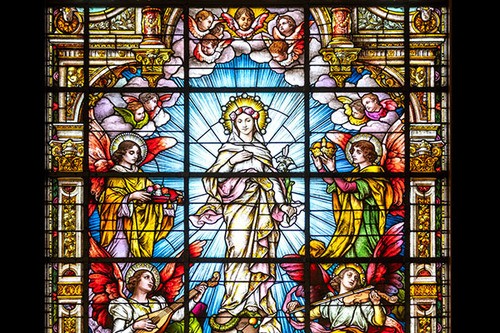
Monday, Dec. 8, is the Solemnity of the Immaculate Conception of the Blessed Virgin Mary. All feasts of Mary are really about Jesus, and this is certainly true in regard to the Immaculate Conception. God the Father gave special blessings to Mary, so that she might be a pure vessel for His son to enter into the world. The graces of salvation, won by the death and resurrection of her Son Jesus, were given to Mary in advance of Jesus’ birth, so that she would be free from all sin, personal and Original.
When we look at Mary, the Immaculate Conception, we see the original plan of God for all of us. He created Adam and Eve without Original Sin, but they chose to follow the serpent, and they, and we, fell from grace. So, she shows us who we were all intended to be.
Mary also shows us who we will be. In heaven we will be purified of all sin, and we will be immaculate ourselves. It is too late for us to be immaculately conceived, but we will be free of all sins when we are in the Kingdom.
The Solemnity of the Immaculate Conception of Mary is a Holy Day of Obligation. We will have Mass at 12:05 pm and 6:30 pm.
When we look at Mary, the Immaculate Conception, we see the original plan of God for all of us. He created Adam and Eve without Original Sin, but they chose to follow the serpent, and they, and we, fell from grace. So, she shows us who we were all intended to be.
Mary also shows us who we will be. In heaven we will be purified of all sin, and we will be immaculate ourselves. It is too late for us to be immaculately conceived, but we will be free of all sins when we are in the Kingdom.
The Solemnity of the Immaculate Conception of Mary is a Holy Day of Obligation. We will have Mass at 12:05 pm and 6:30 pm.
St. Juan Diego
Continuing our Blessed Mother theme for this week we celebrate the Feast of St. Juan Diego on Tuesday, Dec. 9. See more about Juan Diego in the next item on Our Lady of Guadalupe.
Our Lady of Guadalupe
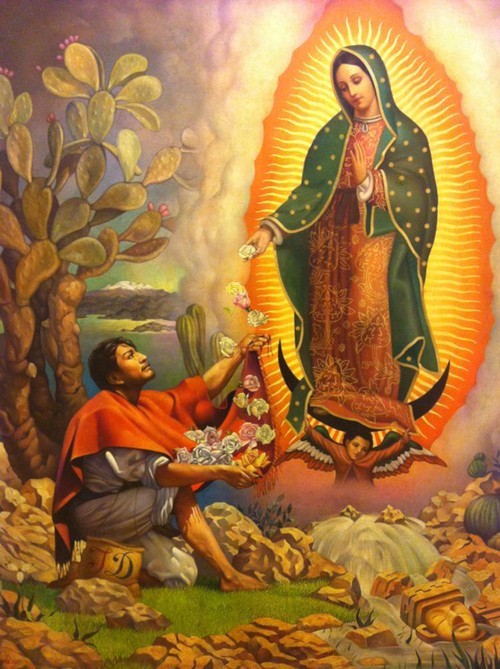
On Dec. 9, 1532, just 40 years after Columbus came to the Americas, a man named Juan Diego was walking past the Hill of Tepeyac, just outside of Mexico City. After Columbus arrived in America, Franciscan missionaries from Spain came to the New Land but had little success in winning converts. Juan Diego was one of their successes. As he walked by the hill, he saw a beautiful woman who told him to go the local bishop and tell him that he was to build a church there dedicated to Mary.
Juan went to the bishop and delivered his message, but the bishop and his advisors were understandably skeptical. He told Juan to tell the woman that, if she was in fact the mother of Jesus, she should give him a sign so that he could know it was she, and that her request was legitimate. Juan told her this. The next day, as he walked by the hill, he saw her again, and she told him to gather the roses that were nearby. This was surprising, since even though it was in a warm climate, roses do not grow in Mexico in winter.
He gathered the roses in his cactus fiber poncho, called a tilma, and carried them to the house of the bishop. Juan was admitted to the bishop’s house, and as he was led into the office of the bishop, he let the tilma drop, and the roses fell to the floor. But what astounded the bishop and his priests was that there was an image on the tilma of the beautiful woman whom Juan had met.
The Basilica of Our Lady of Guadalupe was built. The cactus fiber tilma, with the image of Our Lady still exists and hangs in the Basilica. It should have deteriorated within 25 or 30 years. Another miracle. The word about Mary’s visit to Mexico spread and large numbers of converts were won for Christ. Within 10 years, nine to 10 million indigenous people became Catholic, the most successful missionary triumph in the history of the Church.
The Feast of Our Lady of Guadalupe is this Friday, Dec. 12.
Juan went to the bishop and delivered his message, but the bishop and his advisors were understandably skeptical. He told Juan to tell the woman that, if she was in fact the mother of Jesus, she should give him a sign so that he could know it was she, and that her request was legitimate. Juan told her this. The next day, as he walked by the hill, he saw her again, and she told him to gather the roses that were nearby. This was surprising, since even though it was in a warm climate, roses do not grow in Mexico in winter.
He gathered the roses in his cactus fiber poncho, called a tilma, and carried them to the house of the bishop. Juan was admitted to the bishop’s house, and as he was led into the office of the bishop, he let the tilma drop, and the roses fell to the floor. But what astounded the bishop and his priests was that there was an image on the tilma of the beautiful woman whom Juan had met.
The Basilica of Our Lady of Guadalupe was built. The cactus fiber tilma, with the image of Our Lady still exists and hangs in the Basilica. It should have deteriorated within 25 or 30 years. Another miracle. The word about Mary’s visit to Mexico spread and large numbers of converts were won for Christ. Within 10 years, nine to 10 million indigenous people became Catholic, the most successful missionary triumph in the history of the Church.
The Feast of Our Lady of Guadalupe is this Friday, Dec. 12.