work begins this week on new sound system
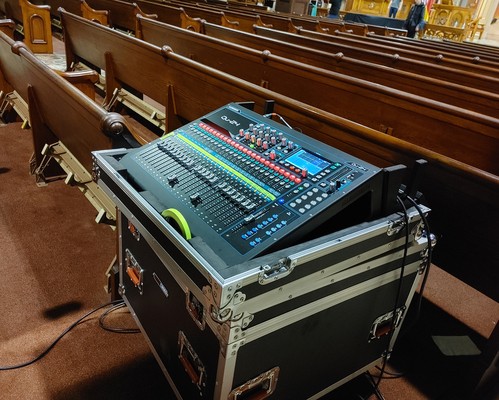
Mother of God has been renting a temporary sound system since November 2025.
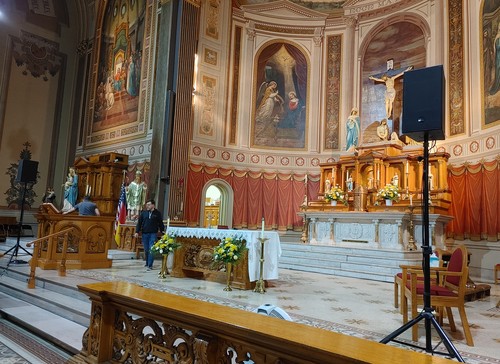
The Meyer line array speakers, which fit neatly in the niches on both sides of the sanctuary will be replaced with two stacks of four shorter columns. Unfortunately, Meyer discontinued manufacturing the line arrays.
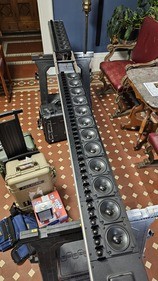
Inside a Meyer line array speaker. Like this, the new speakers can be digitally steered to provide the best audio coverage of the church. Even so, there will always be some seats where the sound is better than others. If you have trouble hearing, you may need to experiment with sitting in different places to discern the best place for you. You can also use our Listen system, which will be functional again once the new sound system is up and running.
Technicians from Ovation Audiovisual will be on site, starting Monday, June 1, to begin installing our new sound system. It's been a long wait since the lightning strike last Nov. 18 that took the system out completely.
There were many hurdles to work through in the time between—the need to do a full assessment of the damage, filing a claim with our insurance company Catholic Mutual, getting a second bid from another vendor, checking with the original system designer to ensure that the proposed installation would work in our space, then waiting for approval from the diocese and the insurance company. The payout for our claim fell short of the total cost of replacing the system, so we had to make up the difference with Diocesan Annual Appeal funds.
Once the funding was in place, Ovation was able to order the necessary equipment, which brings us to now—and we are excited to begin.
It's important to note that Mother of God Church is a complex room in which to install amplification. It was built during a time when no such technology was available. Even the pulpit was situated on the first column instead of in the sanctuary so that lectors and the celebrant could project their voices out into the congregation. Of course, the pipe organ needed no assistance with being heard. The arches were designed to carry sound waves from the dome to the tops of the pillars, and the hard surfaces let the sound reverberate back and forth against the walls, lingering in the air for a full 8 seconds before dying away. While this is wonderful (and very forgiving) for solo classically trained singers and wind instruments, it meant very poor intelligibility for the spoken word and percussive instruments, like the piano, guitars, and drums.
This is why, before installing the previous system, we hired an acoustic architect in 2013 to conduct tests and run computer models of what types of sound equipment would work best for our space. His study is still relevant because the church space has not changed, but technology has. He also serves as an objective advisor/advocate who has no vested interests in pushing any particular vendors or brands of equipment—only what's best for Mother of God.
Ovation is expected to be working in church for the next two weeks, starting each day after the 12:05 Mass. Once everything is installed, our acoustic architect will come to assist with tuning the system. Ovation will also attend both the 9:30 am and 11:30 am Sunday Masses to help us with equalization (adjusting high, mid and low tones) to get the best blend. It may take us a few weeks to get it right, so please be patient.
Thanks to our sound committee (Fr. Comer, Vic Canfield, Aaron Duesing and Cindy Duesing) for their work on this project. Vic, in particular, did a lot of legwork on the approval process and coordinating vendor visits. Finally, thanks to all of you for your understanding and support.
There were many hurdles to work through in the time between—the need to do a full assessment of the damage, filing a claim with our insurance company Catholic Mutual, getting a second bid from another vendor, checking with the original system designer to ensure that the proposed installation would work in our space, then waiting for approval from the diocese and the insurance company. The payout for our claim fell short of the total cost of replacing the system, so we had to make up the difference with Diocesan Annual Appeal funds.
Once the funding was in place, Ovation was able to order the necessary equipment, which brings us to now—and we are excited to begin.
It's important to note that Mother of God Church is a complex room in which to install amplification. It was built during a time when no such technology was available. Even the pulpit was situated on the first column instead of in the sanctuary so that lectors and the celebrant could project their voices out into the congregation. Of course, the pipe organ needed no assistance with being heard. The arches were designed to carry sound waves from the dome to the tops of the pillars, and the hard surfaces let the sound reverberate back and forth against the walls, lingering in the air for a full 8 seconds before dying away. While this is wonderful (and very forgiving) for solo classically trained singers and wind instruments, it meant very poor intelligibility for the spoken word and percussive instruments, like the piano, guitars, and drums.
This is why, before installing the previous system, we hired an acoustic architect in 2013 to conduct tests and run computer models of what types of sound equipment would work best for our space. His study is still relevant because the church space has not changed, but technology has. He also serves as an objective advisor/advocate who has no vested interests in pushing any particular vendors or brands of equipment—only what's best for Mother of God.
Ovation is expected to be working in church for the next two weeks, starting each day after the 12:05 Mass. Once everything is installed, our acoustic architect will come to assist with tuning the system. Ovation will also attend both the 9:30 am and 11:30 am Sunday Masses to help us with equalization (adjusting high, mid and low tones) to get the best blend. It may take us a few weeks to get it right, so please be patient.
Thanks to our sound committee (Fr. Comer, Vic Canfield, Aaron Duesing and Cindy Duesing) for their work on this project. Vic, in particular, did a lot of legwork on the approval process and coordinating vendor visits. Finally, thanks to all of you for your understanding and support.