happy st. patrick's day
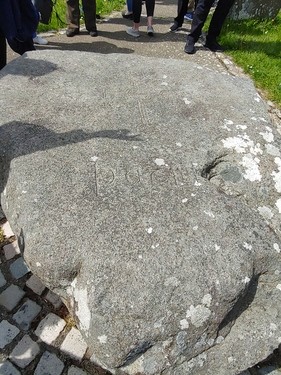
The stone marking what is believed to be the burial place of St. Patrick on Cathedral Hill in Downpatrick, Northern Ireland.
On Tuesday, March 17, we celebrate the feast of St. Patrick. This is a high holy day for those of us who are of Irish descent. But as many say, everyone is Irish on St. Patrick’s Day.
The exact dates of Patrick’s birth and death are not certain, but he lived in the 5th century. Probably living in Wales, when Patrick was 16 years old, he was captured by pirates and was taken to Ireland and sold into slavery. After about six years, he escaped and returned home. He desired to enter the priesthood.
After being ordained a bishop, Patrick had a dream in which a man from Ireland begged him to come back to Ireland and bring the Catholic faith to them. That he decided to do. He returned to Ireland as a missionary and was remarkably successful in preaching the Gospel to the people there. He writes that he baptized thousands of people. The most famous of stories about Patrick as a preacher is his use of the three-leafed shamrock as an object lesson to the king, explaining the Trinity.
Patrick met great opposition from the pagans living in Ireland at that time, mostly druids. Always portrayed with his shepherd’s staff, he had shaved the lower end into a point that he used as a weapon against those who attacked him physically. The myth that Patrick drove the snakes out of Ireland is a symbolic statement that he drove the druids out of Ireland.
“May the road rise up to meet you. May the wind be always at your back. May the sunshine warm your face, and the rain fall softly on your fields. And until we meet again, may God hold you in the palm of His hands.”
The exact dates of Patrick’s birth and death are not certain, but he lived in the 5th century. Probably living in Wales, when Patrick was 16 years old, he was captured by pirates and was taken to Ireland and sold into slavery. After about six years, he escaped and returned home. He desired to enter the priesthood.
After being ordained a bishop, Patrick had a dream in which a man from Ireland begged him to come back to Ireland and bring the Catholic faith to them. That he decided to do. He returned to Ireland as a missionary and was remarkably successful in preaching the Gospel to the people there. He writes that he baptized thousands of people. The most famous of stories about Patrick as a preacher is his use of the three-leafed shamrock as an object lesson to the king, explaining the Trinity.
Patrick met great opposition from the pagans living in Ireland at that time, mostly druids. Always portrayed with his shepherd’s staff, he had shaved the lower end into a point that he used as a weapon against those who attacked him physically. The myth that Patrick drove the snakes out of Ireland is a symbolic statement that he drove the druids out of Ireland.
“May the road rise up to meet you. May the wind be always at your back. May the sunshine warm your face, and the rain fall softly on your fields. And until we meet again, may God hold you in the palm of His hands.”